Your Skin’s Summer Damage Report Is In
Quick answer: Sun damage does not show up while you are getting it. Pigment produced during summer takes weeks to migrate to the surface, which is why your skin looks worse in September than it did in July. The correction window opens now, once UV exposure drops, because resurfacing treatments that would be risky in peak sun are safe and effective in fall. Start with a professional assessment, correct pigment and texture with a chemical peel, photofacial, or microneedling series, and lock the results in with daily SPF. At Accelerated Aesthetics, a medical spa in Elmhurst, IL serving greater Chicagoland, September and October are our busiest correction months for exactly this reason. Consultations are complimentary, and treatment series can be financed through Cherry.
You wore sunscreen. Mostly. You reapplied at the pool that one time you remembered.
And now it is early September, you are looking at yourself in a car mirror in honest daylight, and there are spots on your cheekbones that were not there in May. Your skin feels rougher. Your makeup is sitting on top of it instead of in it.
This is not your imagination and it is not bad luck. It is a predictable, well-documented delay, and understanding it is what turns September into the most useful month on your skincare calendar.
Why does my skin look worse in September than it did all summer?
Three things are happening at once.
Pigment takes time to surface. When UV hits your skin, melanocytes ramp up melanin production as a defense. That pigment then has to travel up through the layers of the epidermis before you can see it, and skin cell turnover takes roughly a month in a healthy adult, longer as you get older. The spots you are seeing now were made in July.
A tan was hiding the unevenness. Overall color masks individual spots. As the tan fades through late August and September, the contrast between your baseline skin and the pigmented areas increases. Nothing got worse. It got visible.
Your barrier is depleted. Sun, chlorine, salt water, air conditioning, and heat all compromise the skin barrier over a season. A depleted barrier reflects light poorly, which reads as dull, and holds less water, which makes fine lines more obvious.
The scale of it is worth sitting with. The Skin Cancer Foundation attributes up to 90 percent of visible skin aging to sun exposure rather than the passage of time. Not most of the spots. Most of the aging.
What is actually on my summer damage report?
Stand at a window in daylight, no makeup, and look for these four.
- New or darker sun spots. Flat, brown, defined edges. Cheekbones, nose, forehead, chest, and the backs of your hands, which everyone forgets and which age faster than the face.
- Rough or bumpy texture. Sun exposure thickens the outermost layer of skin. That is why your foundation stopped sitting right.
- Dullness. Slowed cell turnover plus a compromised barrier equals skin that does not bounce light back.
- Fine lines that read deeper. Partly dehydration, which is reversible in days, and partly genuine collagen loss from UV, which is not reversible but is treatable.
If your pigment is blotchy and symmetrical across both cheeks rather than in distinct spots, that may be melasma rather than sun damage, and the treatment path is different enough that it matters. Our guide to telling melasma from sun damage covers how to sort them apart.
Why is fall the right time to treat sun damage?
Because resurfacing treatments and UV exposure are a bad combination, and the calendar just solved that problem for you.
Any treatment that accelerates cell turnover, whether that is a chemical peel, microneedling, or a light-based treatment, leaves skin temporarily more photosensitive. Doing that in July means either strict sun avoidance during the best weeks of the year or a real risk of rebound pigment, where you end up darker than when you started.
In September, the UV index in the Chicago area drops steadily, you are indoors more, and you have a long runway before anything you actually want to look good for. The American Society of Plastic Surgeons reports over 3.7 million skin resurfacing procedures in a single year, and fall is when a large share of them happen.
There is also a compounding argument. Pigment sits at varying depths, so it clears in layers over a series rather than all at once. Starting in September means a full series is finished and settled before the holidays, instead of scrambling in December.
What order should I fix it in?
Resist the urge to do everything in week one. Damaged skin needs its barrier repaired before it can tolerate correction.
Weeks one and two: repair. Stop all aggressive exfoliation. Hydrate. If your skin is tight, flaky, or stinging when products go on, your barrier is compromised and every correction treatment will work worse and hurt more until that is fixed. A gentle, non-exfoliating AquaJet Facial is the right professional starting point here, and new clients can try the express version for $75.
Weeks two through eight: correct. This is where the real work happens, and there are three routes depending on what bothers you most.
- For pigment and dullness: a chemical peel series is the most direct route, since it accelerates the shedding of exactly the cells carrying the melanin. Starting at $299. Our post on peels and dermaplaning covers what to expect.
- For distinct sun spots and redness: a photofacial targets pigment and broken capillaries with light rather than acid, and is often the fastest path for defined brown spots on the face, chest, and hands.
- For texture and collagen loss: microneedling with exosomes or PRP is the better choice if roughness and fine lines bother you more than color. Our guide to microneedling add-ons explains the options.
Most people benefit from a combination, spaced properly, which is a conversation to have at a complimentary consultation rather than a decision to make from a blog post. You can also browse the full treatment menu.
Ongoing: protect. Everything above is undone by an unprotected February, because UVA passes through window glass and reflects off snow.
How do I pay for a treatment series?
A proper correction series is an investment spread over two to three months, and we would rather you do it right than do half of it. Accelerated Aesthetics offers payment plans through Cherry for treatment plans between $500 and $10,000, with a fast application and flexible monthly options. You can apply in a couple of minutes before your consultation so the plan and the payment are settled in the same visit. Details on all payment options are on our financing page.
What should I be using at home this fall?
Four products do most of the work. All of these are medical-grade formulations we carry and use ourselves.

- Daily SPF with antioxidants. Our Total Defense Repair Cream + SPF 50 ($53) combines protection, hydration, and antioxidant repair in one step, which matters because the routine you actually follow beats the routine you abandon in October.
- A retinoid at night. Advanced WRI-LAX 5x ($125) comes in 2.5% and 5%, and fall is the right season to start or restart one.
- Gentle resurfacing between treatments. Purifying Polish ($53) for texture, or Alpha Beta Pads ($44) with 2% salicylic acid if you are also congested.
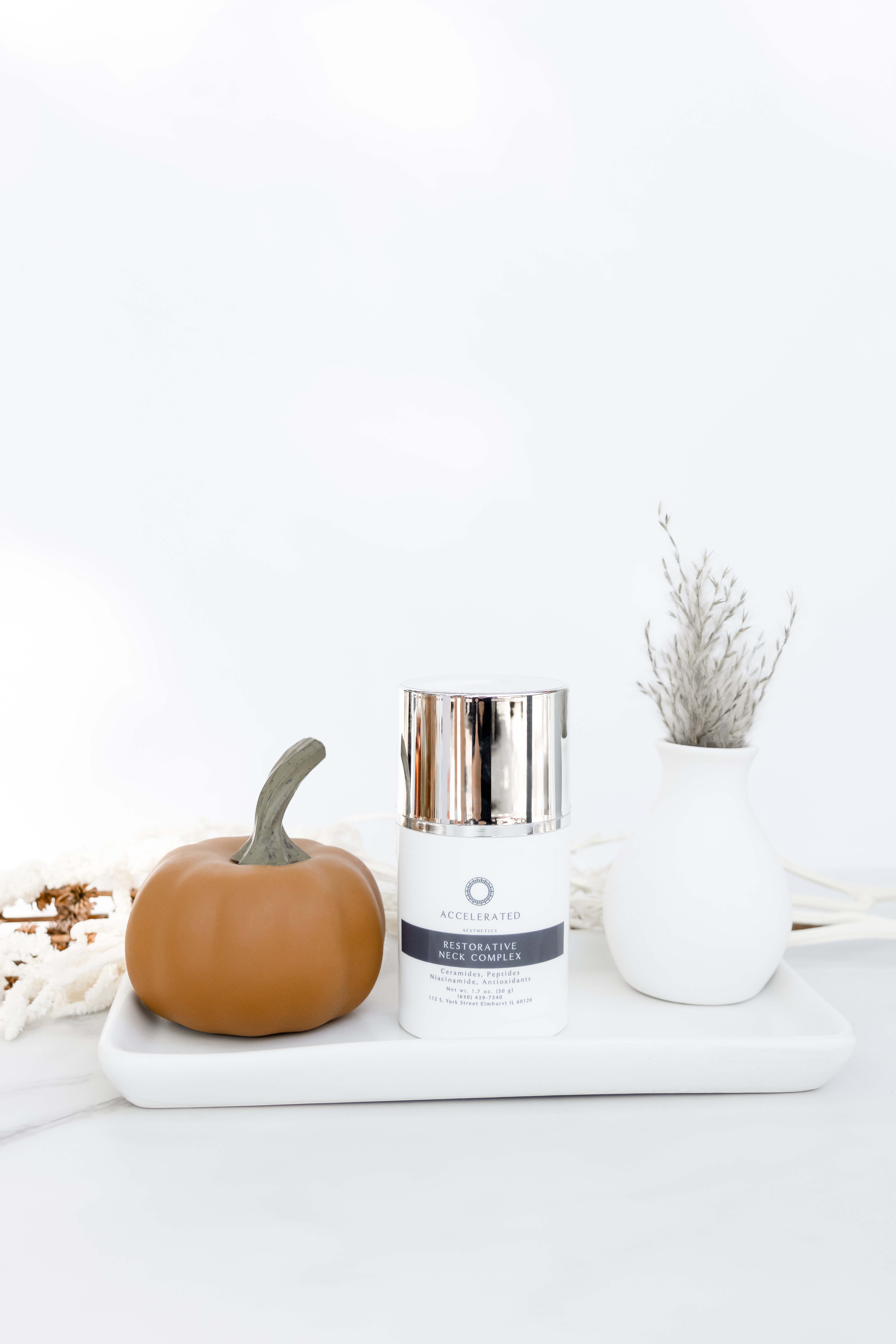
- Hydration underneath everything. Our Hyaluronic Acid Serum ($89) is the fastest way to make dehydration lines stop reading as wrinkles.
Do not start all four in the same week. Add one every five to seven days so that if something irritates you, you know what it was.
Frequently asked questions about summer sun damage
Why do sun spots appear after summer instead of during it?
Melanin produced in response to UV has to travel up through the epidermis before it becomes visible, and skin cell turnover takes roughly a month. A summer tan also masks individual spots, so they become obvious as overall color fades in September.
Can sun damage be reversed?
Surface pigment and texture respond well to resurfacing treatments and consistent topical care. Deeper collagen loss from UV cannot be fully undone, but it can be meaningfully improved with collagen-stimulating treatments like microneedling.
When is the best time of year to treat sun damage?
Fall and winter. Resurfacing treatments leave skin temporarily photosensitive, so lower UV exposure reduces the risk of rebound pigment and makes aftercare far easier to follow.
How long does it take to fade sun spots?
With a professional series plus consistent home care, most people see meaningful improvement in six to twelve weeks. Pigment sits at varying depths, so it clears in layers rather than all at once.
What is the best treatment for sun spots?
For distinct brown spots, a photofacial or a chemical peel series. For overall dullness and texture, peels or microneedling. Many people do a peel or photofacial series first and add microneedling once tone has evened out.
Do I still need sunscreen in the fall and winter in Chicago?
Yes. UVA levels stay relatively constant year-round, pass through window glass, and reflect off snow. UVA is the wavelength most responsible for pigment and photoaging.
Is it too late to fix my skin before the holidays?
No, if you start in September or early October. A full correction series plus settling time runs roughly eight to twelve weeks, which lands comfortably before Thanksgiving and December events.
Do you offer payment plans for skin treatments?
Yes. Accelerated Aesthetics partners with Cherry for payment plans on treatment series between $500 and $10,000, along with CareCredit and Allē. Full details are on our financing page.
What does sun damage treatment cost in the Chicago area?
Chemical peels at Accelerated Aesthetics start at $299, and our AquaJet Facial starts at $250, with a $75 express AquaJet available to new clients. Because pigment responds best to a series, we map out the full plan and pricing at your consultation.
Where can I get sun damage treatment in Elmhurst or the Chicago area?
Accelerated Aesthetics is a medical spa at 112 S. York Street in downtown Elmhurst, IL, roughly 20 minutes west of downtown Chicago and within easy reach of most of Chicagoland. Patients travel to us from Oak Brook, Hinsdale, Downers Grove, Naperville, Wheaton, Lombard, Glen Ellyn, La Grange, Western Springs, Oak Park, Berwyn, Schaumburg, Arlington Heights, Park Ridge, and the city of Chicago itself, along with communities throughout DuPage, Cook, Kane, and Will Counties. Treatments are performed by licensed professionals under the supervision of our Medical Director.
Get your actual report.
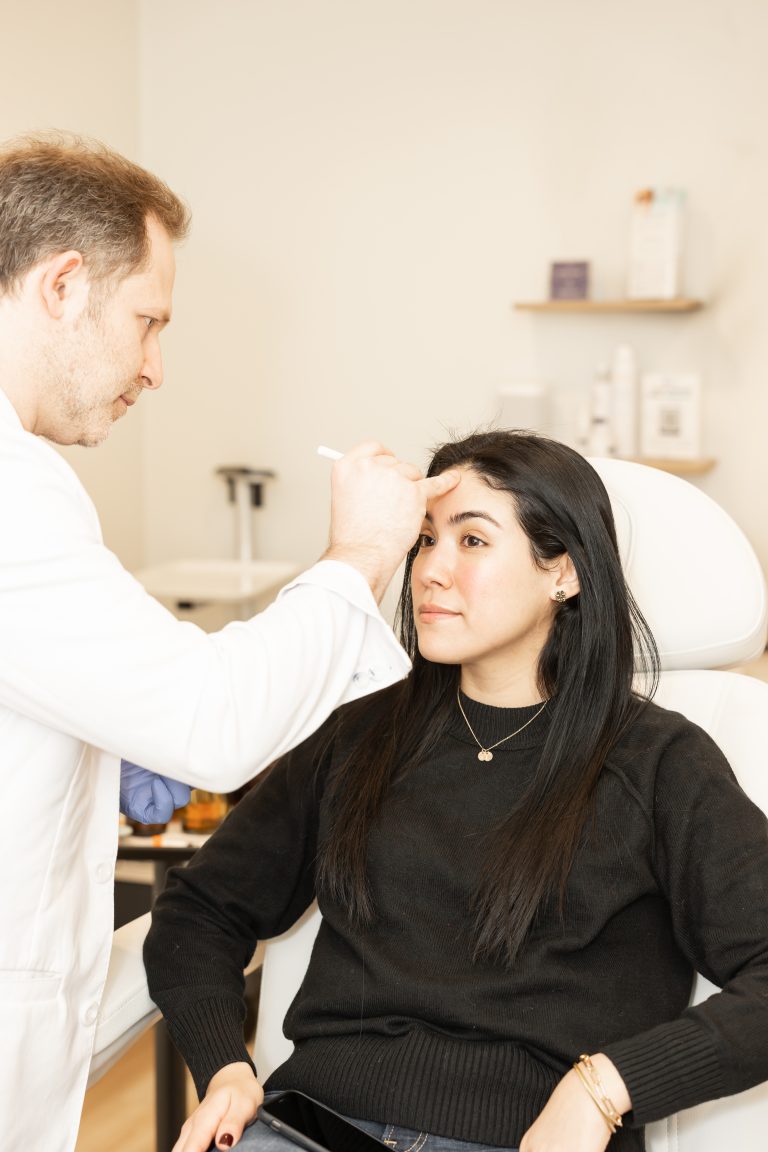
Bring us your face in September and we will tell you what the summer did, what will clear, what will not, and how long it takes. Consultations are complimentary and payment plans are available through Cherry.
112 S. York Street, Elmhurst, IL 60126
Accelerated Aesthetics is a medical spa in downtown Elmhurst, IL, serving greater Chicagoland: the city of Chicago, the western and northwest suburbs, and communities throughout DuPage, Cook, Kane, and Will Counties.
Last updated September 2026.