How Do I Get Rid of Dark Spots? Melasma, Sun Damage, and Post-Acne Marks
Quick answer: Dark spots fall into three main categories and they do not respond to the same treatment. Sun spots are flat brown patches with defined edges that clear reliably with resurfacing and pigment-targeted treatment. Post-inflammatory hyperpigmentation is the mark left behind after acne or irritation, and it fades on its own with help. Melasma is a hormonally driven, symmetrical patchiness that is managed rather than cured, and aggressive treatment can rebound it worse. Identifying which one you have is the whole difference between clearing your skin and setting it back. At Accelerated Aesthetics, a medical spa in Elmhurst, IL serving greater Chicagoland, our licensed medical providers assess pigment type before selecting a protocol.
Almost everyone comes in describing the same thing. Dark spots. Uneven tone. That patch on the cheekbone that shows through foundation by lunchtime.
But pigment is not one problem. It is at least three, and they behave so differently that a treatment which clears one can genuinely aggravate another. This is the article that keeps you from wasting eighteen months on the wrong approach.
What kind of dark spots do I have?
Look at the shape, the symmetry, and the history.
- Sun spots, also called solar lentigines. Individual flat brown spots with fairly crisp edges. They live where sun lands most: cheekbones, nose, forehead, chest, backs of hands. They accumulate over years and do not come and go.
- Post-inflammatory hyperpigmentation, or PIH. A flat brown or reddish mark exactly where something happened. An old pimple, a bug bite, a scratch, a wax burn. The giveaway is that you can trace it back to a specific event, and it is not raised or indented.
- Melasma. Larger, blurry-edged patches that tend to appear symmetrically on both sides of the face, most often across the upper cheeks, the forehead, and above the lip. It flares with heat, sun, pregnancy, and hormonal changes including birth control, and it often improves in winter and returns in summer.
Melasma is common enough to deserve its own conversation. The American Academy of Dermatology estimates it affects roughly five million people in the United States, and the large majority of those cases are women.
One more category worth naming: if a spot is raised, changing, irregularly shaped, multicolored, or new and growing, that is a dermatologist visit, not a medspa treatment. Please go get it looked at.
What actually clears sun spots?
Sun damage is the most satisfying pigment to treat because it responds predictably.
- Chemical peels. A peel accelerates the shedding of pigmented cells and stimulates fresh, more evenly toned skin beneath. A series produces far better results than a single session, because pigment sits at varying depths.
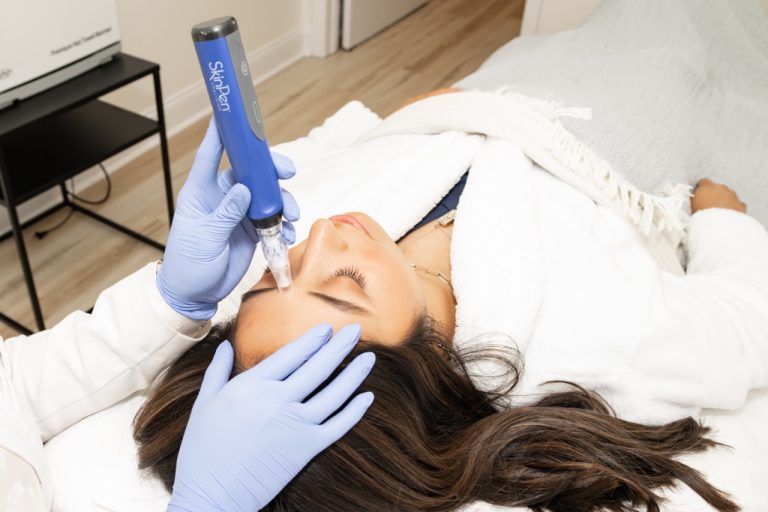
- Microneedling. By driving controlled turnover and collagen remodeling, microneedling with exosomes or PRP improves tone alongside texture, which matters because sun-damaged skin is usually rough as well as spotted.
- Consistent topicals. A retinoid at night plus vitamin C in the morning is the least glamorous and most reliable combination in skincare.
- Regular resurfacing facials. Treatments like dermaplaning paired with a peel keep the surface clear so your products actually penetrate.
Expect visible improvement in six to twelve weeks with a proper series. Expect it to come back if you stop wearing sunscreen, because that is the mechanism that created it in the first place.
How do I fade marks left behind by acne?
Post-inflammatory hyperpigmentation fades on its own eventually, sometimes over many months. The goal of treatment is to shorten that timeline and prevent new marks from forming.
- Control the acne first. Treating marks while new breakouts keep appearing is a losing game. Get the source calm, then clear the evidence.
- Stop picking. Genuinely the single highest-impact intervention. Extended inflammation means darker, longer-lasting marks.
- Gentle, consistent exfoliation. Salicylic and mandelic acid work well here because they address turnover and congestion at the same time.
- Sunscreen every single day. UV exposure darkens an existing mark and slows its resolution, which is why PIH so often looks worse after a summer.
A note on skin tone. Deeper skin tones produce more melanin in response to inflammation, so PIH is both more common and more persistent, and overly aggressive treatment can trigger more pigment rather than less. Conservative, layered protocols work better than intensive ones.
Can melasma be cured?
No, and any provider who promises otherwise is either uninformed or selling you something. Melasma is managed, not cured. But managed well, it can be nearly invisible for long stretches.
What makes melasma different is that the pigment cells themselves are overactive and easily provoked. Heat provokes them. Friction provokes them. Aggressive lasers and deep peels frequently provoke them, which is why melasma can rebound darker after a treatment that would have cleared a sun spot beautifully.
What works:
- Rigorous daily sun protection, including a tinted mineral SPF. Iron oxides in tinted formulas block visible light, which triggers melasma in a way that traditional clear sunscreens do not address.
- Pigment-pathway ingredients used long term. Tranexamic acid, azelaic acid, niacinamide, and cysteamine each interrupt melanin production at different points.
- Conservative, superficial professional treatment. Light peels selected specifically for melasma-prone skin, spaced generously.
- Heat awareness. Hot yoga, saunas, steam, and long sun-facing drives all contribute. This is unwelcome news and it is also true.
- Patience measured in seasons. Meaningful melasma improvement is a six to twelve month project, and it needs maintenance forever.
What about dark circles under the eyes?
Under-eye darkness is its own category, because only some of it is actually pigment. The rest is shadow from volume loss, which no brightening product will touch. Our guide to under-eye circles and hollows walks through how to tell the difference in a mirror.
If yours is pigment, the skin there is far thinner and more reactive than the skin on your cheek, so it needs a formula built for it rather than whatever you are using on the rest of your face.

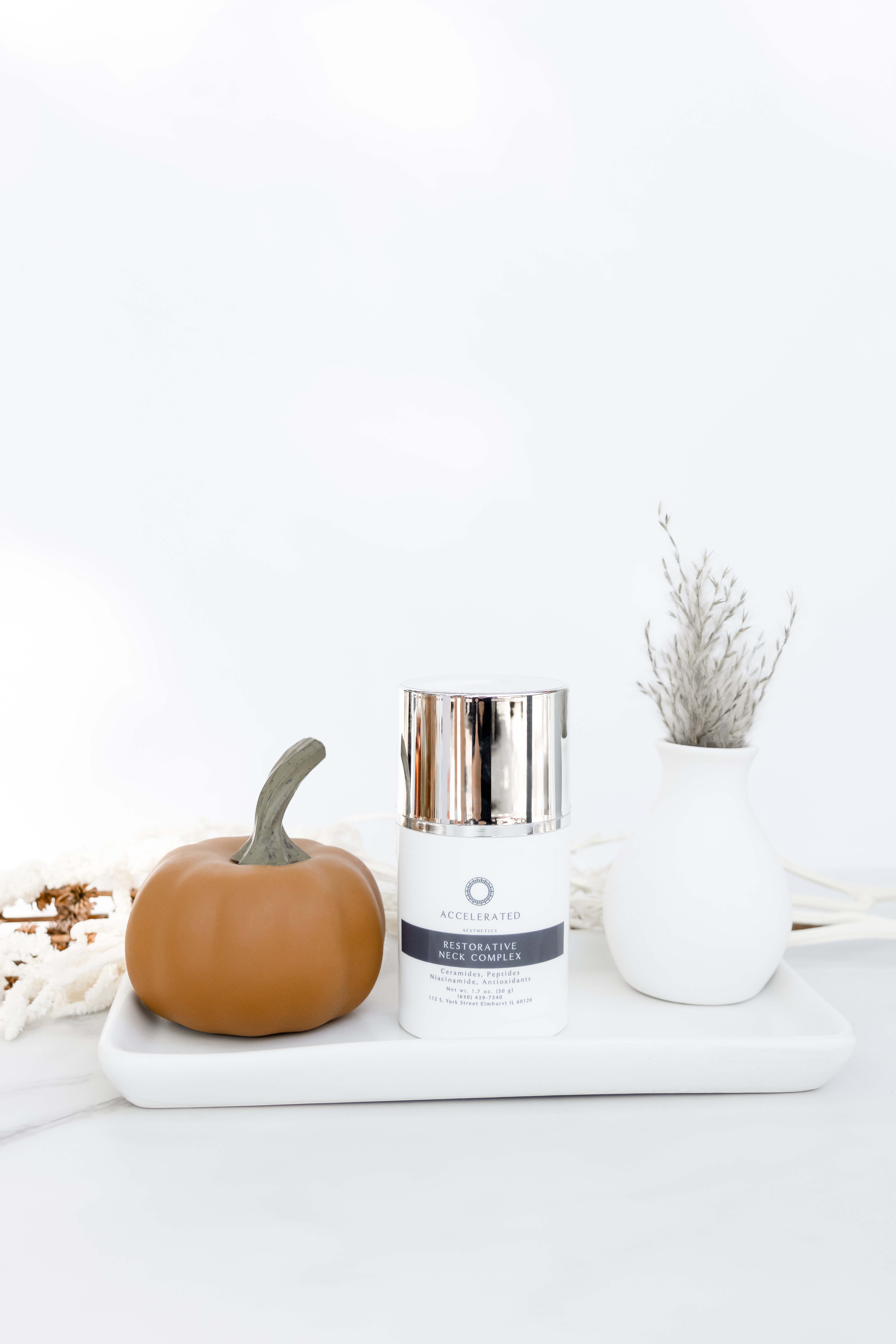
Our RX Repair Eye Cream is formulated for exactly that: brightening and fine-line support in a texture the periorbital area tolerates. Patted on morning and night, given three months, and paired with sunscreen.
Why do my dark spots keep coming back?
Three reasons, in order of how often we see them.
First, inconsistent sunscreen. Not “most days.” Every day, including winter, including cloudy days, including the drive to work, because UVA passes through window glass.
Second, stopping treatment as soon as things look good. Pigment clears from the surface before it clears from the deeper layers, so quitting at the visible finish line means the remainder rises back up.
Third, the wrong diagnosis. Melasma treated like sun damage will keep returning worse, and that is not your fault or a failure of effort.
Frequently asked questions about dark spots
What is the difference between melasma and sun spots?
Sun spots are individual, flat, sharply defined brown spots caused by cumulative UV exposure. Melasma appears as larger, blurry-edged patches that are usually symmetrical on both sides of the face, is driven by hormones and heat as well as sun, and tends to flare and fade seasonally.
How long does it take to get rid of dark spots?
Sun spots and post-acne marks typically improve visibly in six to twelve weeks with a consistent professional and at-home protocol. Melasma is a six to twelve month management project with ongoing maintenance.
Do chemical peels help with hyperpigmentation?
Yes. Peels accelerate the shedding of pigmented cells and improve overall tone. Depth and formulation must be matched to pigment type, since peels that are too aggressive can worsen melasma and post-inflammatory pigment in deeper skin tones.
Can I treat melasma with a laser?
Some laser and energy treatments are used for melasma, but heat is a known trigger and rebound darkening is a real risk. Melasma-prone skin generally does better with conservative topical protocols and superficial peels, evaluated case by case.
Does vitamin C fade dark spots?
Vitamin C inhibits an enzyme involved in melanin production and provides antioxidant protection against further pigment formation. It works best as one layer of a protocol rather than on its own.
Will dark spots go away on their own?
Post-inflammatory marks usually fade over several months to a year without treatment. Sun spots generally do not resolve on their own. Melasma fluctuates but does not permanently disappear without management.
Can I do a chemical peel if I have melasma?
Often yes, with a superficial formulation chosen specifically for pigment-reactive skin and spaced conservatively. This is a case where provider experience matters more than treatment intensity.
What is the best product for dark circles under the eyes?
Under-eye skin needs a formula built for it. Our RX Repair Eye Cream targets pigment and fine lines in a texture the thin periorbital area tolerates. If your darkness is shadow from volume loss rather than pigment, no topical will change it.
What does a chemical peel cost in the Chicago area?
Chemical peels at Accelerated Aesthetics start at $299. Because pigment responds best to a series, we will map out the full plan and pricing at your consultation rather than surprising you partway through.
Where can I get dark spot treatment in Elmhurst or the Chicago area?
Accelerated Aesthetics is a medical spa at 112 S. York Street in downtown Elmhurst, IL, roughly 20 minutes west of downtown Chicago and within easy reach of most of Chicagoland. Patients travel to us from Oak Brook, Hinsdale, Downers Grove, Naperville, Wheaton, Lombard, Glen Ellyn, La Grange, Western Springs, Oak Park, Berwyn, Schaumburg, Arlington Heights, Park Ridge, and the city of Chicago itself, along with communities throughout DuPage, Cook, Kane, and Will Counties. Treatments are performed by licensed professionals under the supervision of our Medical Director.
Let us look at it properly.
Bring the spot, bring your history, and we will tell you which category it falls into and what will actually move it. Consultations are free.
112 S. York Street, Elmhurst, IL 60126
Accelerated Aesthetics is a medical spa in downtown Elmhurst, IL, serving greater Chicagoland: the city of Chicago, the western and northwest suburbs, and communities throughout DuPage, Cook, Kane, and Will Counties.
Last updated August 2026.