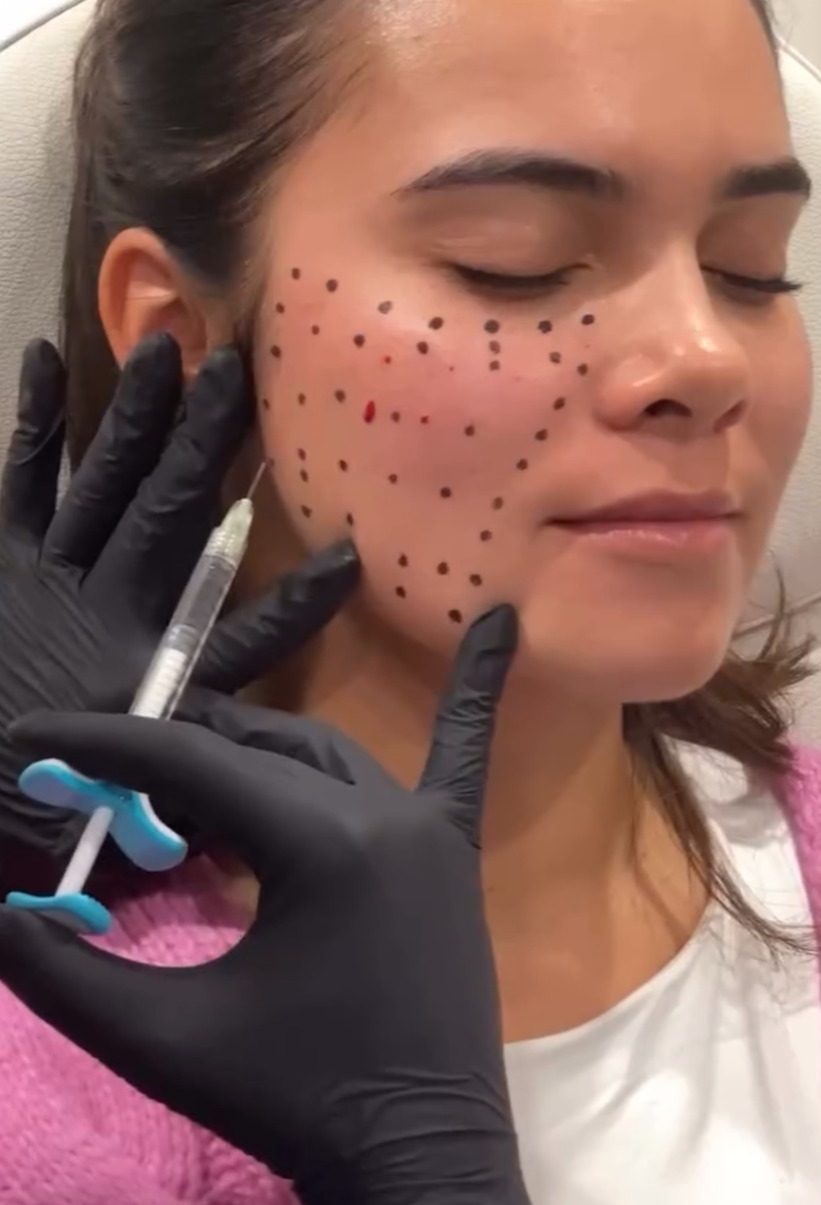
Ozempic Face: Why It Happens and How to Restore Volume Without Surgery
Quick answer: “Ozempic face” is the hollow, deflated, or suddenly older look some people notice after losing weight on GLP-1 medications like Ozempic, Wegovy, Mounjaro, or Zepbound. The medication is not damaging your face. You are losing facial fat along with body fat, and skin that has lost collagen does not always shrink back to fit. The fix is usually a combination: Sculptra to rebuild collagen gradually, hyaluronic acid filler to restore volume in specific spots like the cheeks, temples, and under eyes, and skin tightening treatments like radiofrequency to firm the skin itself. At Accelerated Aesthetics, a medical spa in Elmhurst, IL serving greater Chicagoland, we build these plans around where you are in your weight loss journey.
You did the hard part. The weight is coming off, your clothes fit differently, and you feel better than you have in years.
And then you catch yourself in a photo and think: why do I look so tired?
You are not imagining it, and you are definitely not alone. Here is what is actually happening, and what we can do about it.
What is Ozempic face?
Ozempic face is not a medical diagnosis. It is the nickname for the facial changes that can follow fast weight loss, and it shows up most often as:
- Hollow temples that make the face look narrower at the top
- Flatter cheeks that lose their lift and curve
- Deeper lines from the nose to the mouth
- Under-eye hollows that read as exhaustion
- A softer jawline and looser neck
- Thinner, crepey-looking skin
It is also incredibly common. Nearly one in five U.S. adults (18%) say they have taken a GLP-1 drug, and about 12% are taking one now, according to a November 2025 KFF poll. Search interest in “Ozempic face” rose roughly 4,600% between late 2021 and late 2024, according to a 2026 Google Trends analysis published in the Journal of Cosmetic Dermatology.
Why does weight loss make your face look older?
Your face is built on small, separate fat pads. In your twenties they sit high and full, and they are a big part of what makes a face look young: the round apple of the cheek, the smooth temple, the soft area under the eye.
When you lose weight, those pads shrink along with everything else. The skin that was draped over them is now draped over less, so it folds and sags in places it did not before.
Two things make it more noticeable:
- Speed. GLP-1 medications can take weight off faster than diet and exercise alone, which gives your skin less time to adapt.
- Collagen. Collagen production slows steadily with age, so skin in your forties and beyond simply does not bounce back the way it did at 25.
Any significant weight loss can do this. The medication just made it faster and far more common.
Can you fix Ozempic face without surgery?
For most people, yes. A good plan works on three layers at once:
- Rebuild: stimulate your own collagen so the face regains structure over time
- Replace: put volume back exactly where it was lost
- Tighten: firm and thicken the skin so it fits the new shape
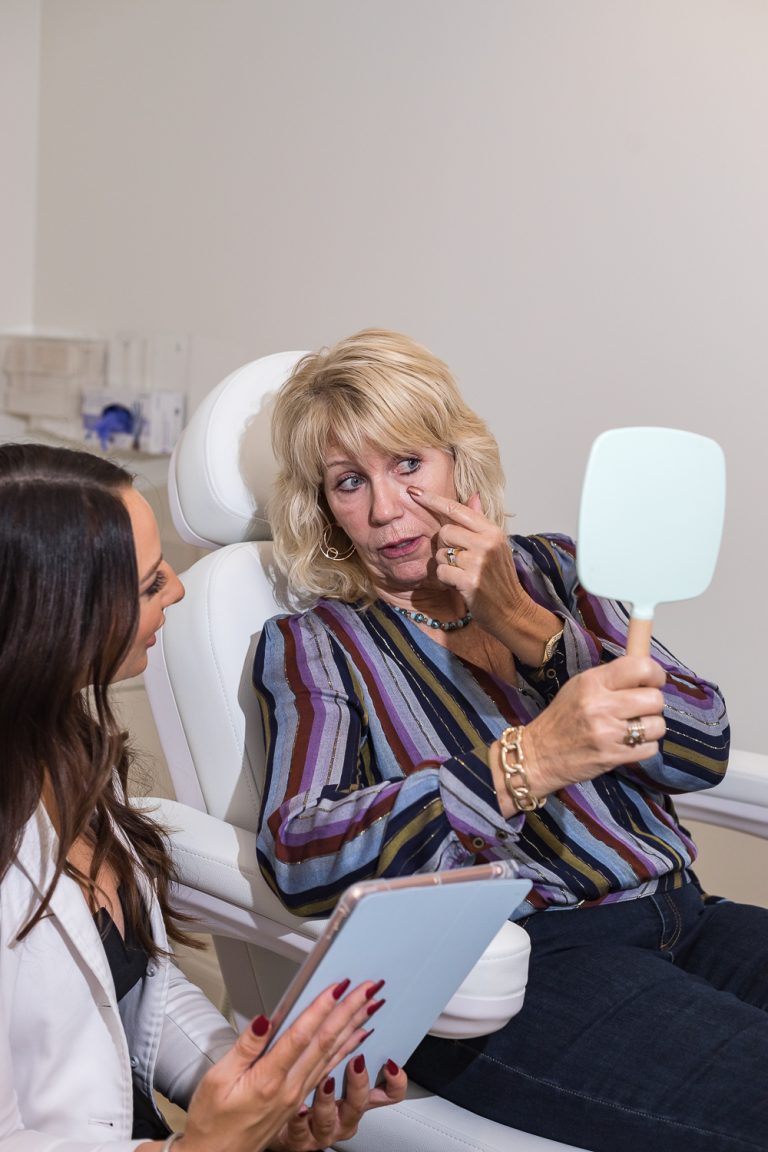
Most people need some of each. Which mix depends on how much volume you lost, where, and how your skin is holding up. That is what your consultation is for.
How does Sculptra help with Ozempic face?
Sculptra is a collagen stimulator made of poly-L-lactic acid. Instead of filling a space directly, it prompts your body to build its own collagen over the following months.
That makes it the best match for the kind of broad, all-over volume loss that comes with weight loss: temples, cheeks, and the sides of the face. Results build gradually across a short series of sessions, so nobody sees a sudden change, just a face that looks rested and full again. Results can last two years or more.
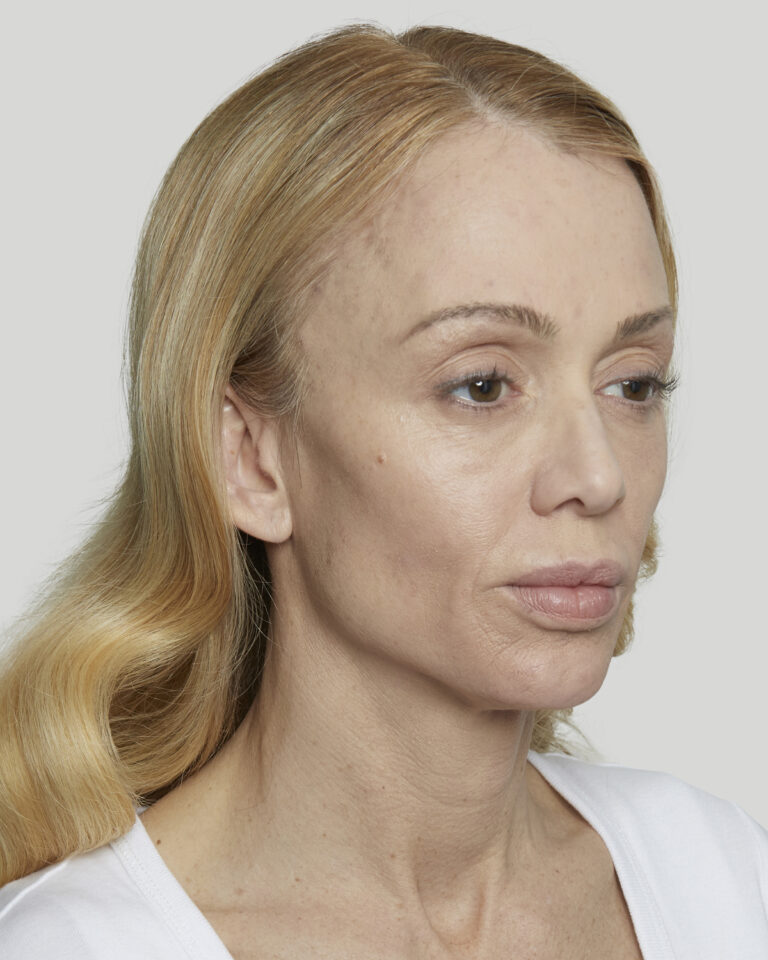
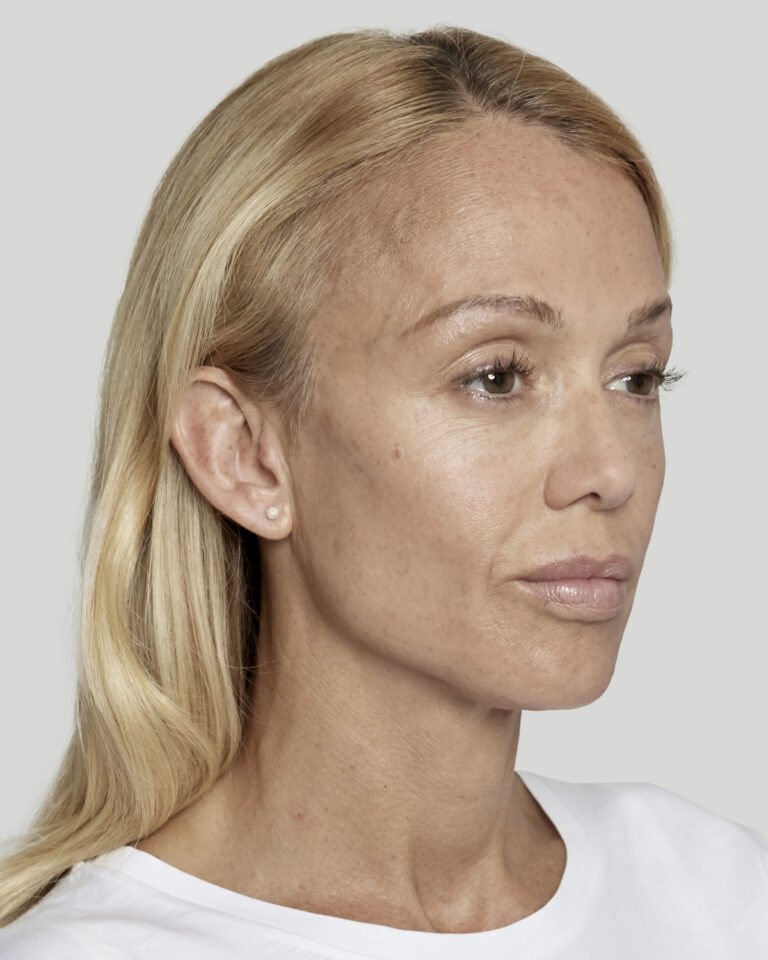
Sculptra before and after, showing restored volume in the temples and cheeks. Anna, age 43. Actual patient. Individual results may vary. Treated with 6 vials of Sculptra® Aesthetic. 15 and 24 weeks after initial treatment. Results have not been retouched. Photos courtesy of Galderma.
Sculptra at Accelerated Aesthetics starts at $650. Our post on Sculptra and gradual volume restoration goes deeper on how it works.
When is facial filler the right choice?
Hyaluronic acid dermal filler gives you something Sculptra cannot: immediate, precise volume in a specific spot. We use Restylane fillers, and the most common areas for weight-loss patients are:
- Cheeks to restore lift and shape (starting at $550)
- Temples to soften that hollowed look (starting at $650)
- Under eyes for hollows that make you look tired (starting at $599)
- Jawline and chin to bring back definition (starting at $650 to $750)
Hyaluronic acid filler is also reversible, which matters to a lot of first-time patients. Many of our weight-loss patients have never had an injectable before, and the most common worry is looking overdone. Our post Will Filler Make Me Look Fake? answers that one directly.
Often the best result combines both: Sculptra to rebuild the foundation, filler to finish the details. For skin that looks dull and crepey rather than hollow, SKINVIVE adds microdroplets of hyaluronic acid to improve smoothness and glow without adding volume.
What tightens and replumps skin after weight loss?
Volume is only half of it. If the skin itself has gone thin and loose, these treatments firm it up:
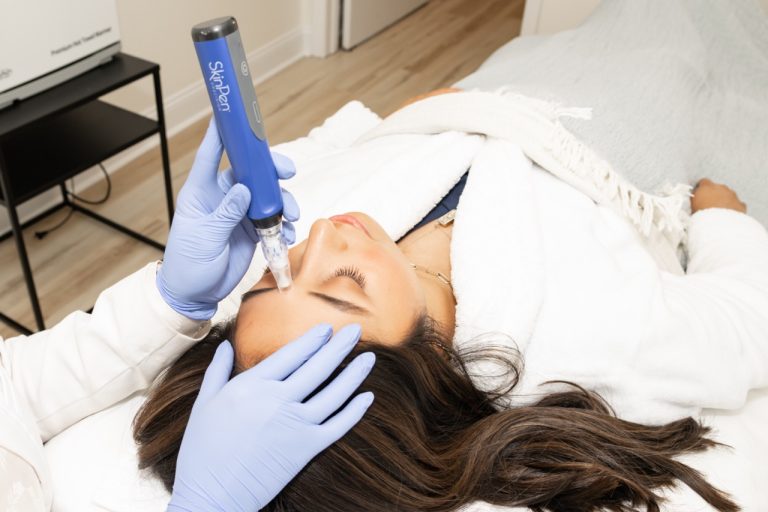
- Radiofrequency skin tightening: gentle heat warms the deeper layer of the skin and triggers new collagen and elastin. No needles and no downtime, done as a series.
- RF microneedling: combines microneedling with radiofrequency energy for stronger tightening and texture improvement (starting at $550).
- PRX-T33: a no-peel peel that leaves skin noticeably firmer and more hydrated, with no downtime.
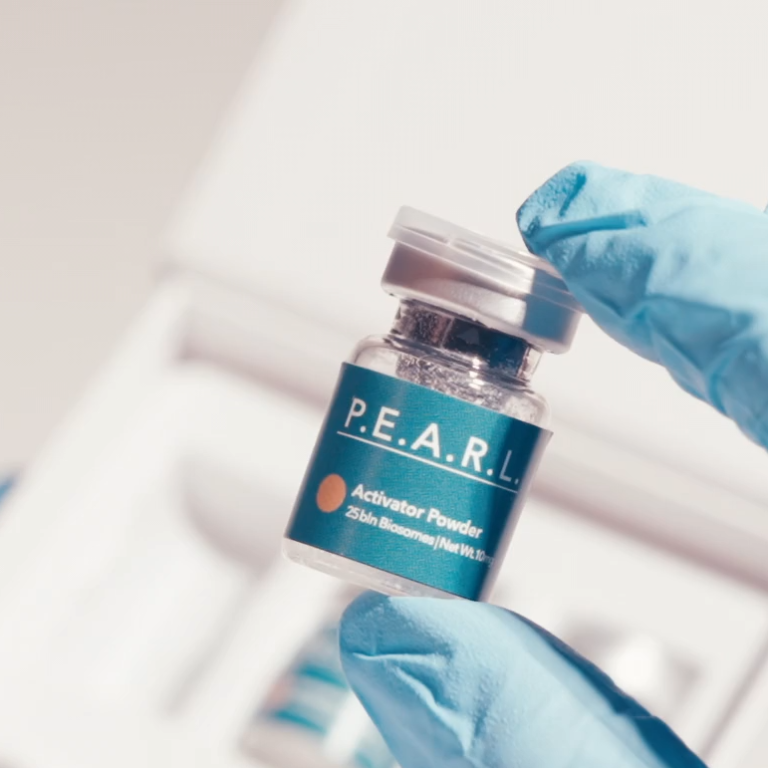
- Microneedling with exosomes: rebuilds skin quality and thickness over a series of sessions.
These are the treatments that make skin look healthy again, not just fuller. They also help filler and Sculptra results look more natural, because the skin over them looks better.
Should I wait until I reach my goal weight?
For volume, it usually makes sense to wait until your weight is close to stable. If you are still losing, your face will keep changing, and we would rather place volume once than chase it.
Skin treatments are different. Radiofrequency, microneedling, and PRX-T33 can start anytime, and starting early helps your skin keep up as the weight comes off.
Accelerated Aesthetics also offers medical weight loss, so we can plan your face and your body together instead of treating them as two separate problems.
Frequently asked questions about Ozempic face
What is Ozempic face?
Ozempic face is the hollow, sagging, or aged look that can follow rapid weight loss on GLP-1 medications. It comes from losing facial fat pads faster than the skin can adapt. It is not a side effect of the drug acting on the skin, and it can happen with any significant weight loss.
Does Ozempic face go away on its own?
Not usually. Lost facial fat does not return unless weight comes back, and skin with less collagen may not fully tighten on its own. Collagen-stimulating and volumizing treatments are the most reliable way to restore it without surgery.
Does this happen with Wegovy, Mounjaro, and Zepbound too?
Yes. The term started with Ozempic, but the same facial changes can follow weight loss on any GLP-1 medication, or from weight loss without medication.
Is Sculptra or filler better for Ozempic face?
They do different jobs. Sculptra rebuilds collagen gradually and is best for broad volume loss across the temples and cheeks. Hyaluronic acid filler adds immediate, precise volume to specific areas like the under eyes or jawline. Many patients get the most natural result from using both.
How long does Sculptra last?
Sculptra results develop over a few months and can last two years or more, because the collagen it stimulates is your own.
Can I get filler or Sculptra while I am still on a GLP-1?
Taking a GLP-1 does not on its own rule out injectables. Tell your injector about your medication and how much more weight you plan to lose so the timing makes sense. Skin tightening treatments can usually start right away.
How much does Ozempic face treatment cost in the Chicago area?
At Accelerated Aesthetics, Sculptra starts at $650, cheek filler at $550, under-eye filler at $599, and RF microneedling at $550. Most patients need a combination, so we price your full plan at a complimentary injectable consultation. Cherry payment plans from $500 to $10,000 let you spread the cost over time, and our financing page also lists CareCredit and Allē.
Where can I get Ozempic face treatment near Elmhurst or Chicago?
Accelerated Aesthetics is a medical spa at 112 S. York Street in downtown Elmhurst, IL, roughly 20 minutes west of downtown Chicago and within easy reach of most of Chicagoland. Patients travel to us from Oak Brook, Hinsdale, Downers Grove, Naperville, Wheaton, Lombard, Glen Ellyn, La Grange, Western Springs, Oak Park, Berwyn, Schaumburg, Arlington Heights, Park Ridge, and the city of Chicago itself, along with communities throughout DuPage, Cook, Kane, and Will Counties. Treatments are performed by licensed professionals under the supervision of our Medical Director.
Let your face catch up with the rest of you.
Bring us where you started, where you are now, and where you are headed. Our injectors will map a plan that restores what you lost without making you look like someone else. Injectable consultations are complimentary.
112 S. York Street, Elmhurst, IL 60126
Accelerated Aesthetics is a medical spa in downtown Elmhurst, IL, serving greater Chicagoland: the city of Chicago, the western and northwest suburbs, and communities throughout DuPage, Cook, Kane, and Will Counties.
Last updated October 2026.